

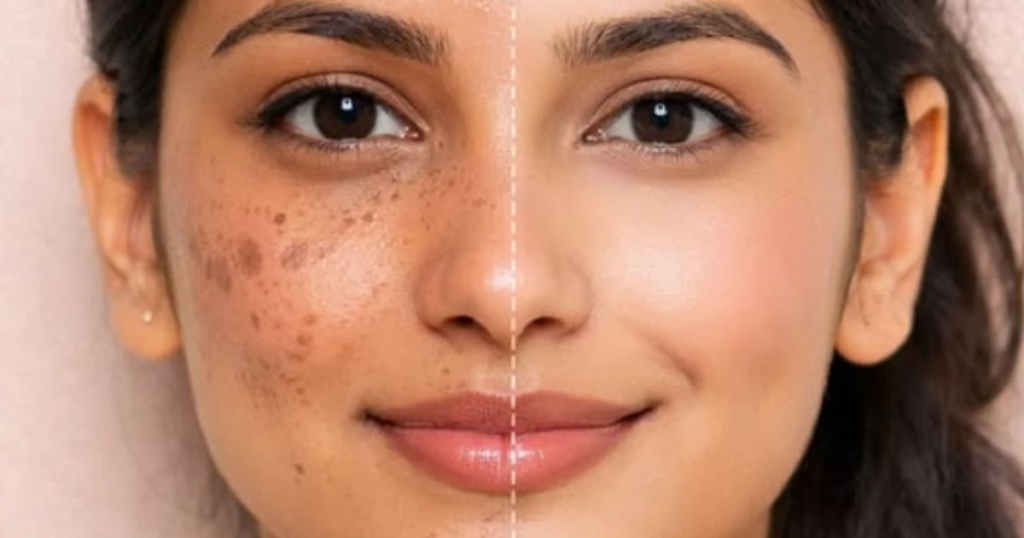
Uneven pigmentation is a common skin concern that can affect people of all ages and skin types. It may appear as darker patches, sun spots, post-acne marks, or areas of skin that look different from the surrounding complexion. Although pigmentation is often harmless, many people want a more even and balanced appearance.
A consistent skincare routine, sun protection, and carefully selected ingredients can help improve the appearance of uneven pigmentation over time. Understanding what causes pigmentation is an important first step toward choosing an appropriate approach.
What Is Uneven Pigmentation?
Uneven pigmentation occurs when some areas of the skin produce or retain more pigment than others. Melanin is the natural pigment responsible for skin, hair, and eye color. Changes in melanin production can create areas that appear darker or lighter than the surrounding skin.
Dark spots are sometimes called hyperpigmentation. They can develop after acne, inflammation, irritation, hormonal changes, or exposure to ultraviolet radiation.
The appearance and cause of pigmentation can vary considerably. Therefore, identifying the underlying reason can help determine which skincare approach is most appropriate.
Common Causes of Uneven Skin Pigmentation
Several factors can contribute to pigmentation changes. Sun exposure is one of the most common because ultraviolet radiation can stimulate melanin production.
Acne and other inflammatory skin conditions can leave temporary dark marks after the original problem has healed. This is known as post-inflammatory hyperpigmentation.
Hormonal changes can also contribute to certain pigmentation patterns. Some people develop melasma, which commonly appears as larger brown or grayish patches on areas such as the cheeks, forehead, nose, or upper lip.
Skin irritation from unsuitable products, excessive exfoliation, or aggressive treatments may also trigger or worsen pigmentation in some individuals.
How Sun Exposure Affects Pigmentation
Ultraviolet radiation can stimulate pigment-producing cells, increasing melanin production. Repeated exposure may make existing dark spots more noticeable and can contribute to the development of new pigmentation.
This makes sun protection one of the most important parts of a routine focused on reducing the appearance of uneven pigmentation.
Using broad-spectrum sunscreen regularly can help protect the skin from ultraviolet radiation. Sunscreen should be applied according to the product’s directions and reapplied when appropriate, particularly during extended outdoor exposure.
Physical protection, such as wearing a hat and seeking shade, can provide additional protection.
The Connection Between Acne and Dark Marks
Acne can leave behind dark marks even after pimples have disappeared. These marks are particularly common when inflammation has been significant or when the skin has been picked or squeezed.
Avoiding unnecessary picking can help reduce additional inflammation and potential discoloration. Treating acne appropriately may also help prevent new marks from developing.
Once acne is under control, ingredients that support skin renewal or help regulate pigmentation may gradually improve the appearance of existing marks.
However, pigmentation can take time to fade, and results vary depending on skin type and the cause of discoloration.
Importance of Daily Sun Protection
Daily sun protection is essential when addressing uneven pigmentation. Without adequate protection, ultraviolet exposure can continue stimulating pigment production and may reduce the visible benefits of a skincare routine.
Choose a broad-spectrum sunscreen with a suitable sun protection factor and apply enough product to cover exposed skin. Areas such as the face, neck, ears, and hands should not be overlooked.
People who spend significant time outdoors may need to reapply sunscreen during the day. Sunglasses, hats, protective clothing, and shade can also help reduce exposure.
Skincare Ingredients for Uneven Pigmentation
Several skincare ingredients are commonly used to improve the appearance of dark spots. These include vitamin C, niacinamide, retinoids, azelaic acid, and certain exfoliating acids.
These ingredients work in different ways. Some support skin renewal, while others can influence pigment production or improve overall skin tone.
Not every ingredient works equally well for every person. Introducing several active products at once can also increase irritation.
A gradual approach is often easier to tolerate. Patch testing new products and following their instructions can help reduce unnecessary irritation.
Vitamin C and Skin Brightening
Vitamin C is a popular skincare ingredient because of its antioxidant properties and its role in supporting a more even-looking complexion.
Topical vitamin C products are commonly used to address the appearance of dark spots and dullness. Formulations can vary significantly in concentration and stability.
Consistency is important, but stronger products are not necessarily better for everyone. Sensitive skin may respond better to a lower concentration or less frequent application.
Vitamin C can complement sunscreen as part of a broader daytime skincare routine, although it should not replace sun protection.
Retinoids and Skin Renewal
Retinoids are vitamin A derivatives used in skincare and dermatology. They can encourage skin cell turnover and are commonly used for concerns such as acne, texture, and uneven skin tone.
By supporting skin renewal, retinoids may help improve the appearance of some forms of hyperpigmentation over time.
Retinoids can cause dryness, peeling, or irritation, particularly when first introduced. Starting gradually and using a moisturizer can improve tolerance.
People who are pregnant or trying to become pregnant should consult a healthcare professional before using retinoid products.
Gentle Exfoliation for a More Even Appearance
Exfoliating ingredients can help remove dead surface skin cells and improve the appearance of texture and tone. Common chemical exfoliants include alpha hydroxy acids and beta hydroxy acids.
However, excessive exfoliation can damage the skin barrier and cause irritation. In some people, irritation can actually make pigmentation more noticeable.
For this reason, gentle and moderate use is generally preferable to aggressive exfoliation. Combining multiple strong acids with other active ingredients may increase the chance of irritation.
Allowing the skin time to adjust can support a more comfortable skincare routine.
Keeping the Skin Barrier Healthy
A healthy skin barrier helps protect the skin from environmental stressors and reduces moisture loss. When the barrier becomes irritated or damaged, the skin may become dry, sensitive, and more reactive.
A basic routine should include gentle cleansing, appropriate moisturizing, and sun protection.
Avoid harsh scrubs, excessive washing, and products that consistently cause burning or irritation. A simpler routine can sometimes be more effective than using numerous active products simultaneously.
Healthy-looking skin provides a better foundation for targeted pigmentation care.
Professional Treatments for Pigmentation
For persistent pigmentation, dermatologists may recommend professional treatments. Depending on the cause and skin type, options can include prescription medications, chemical peels, laser procedures, or other dermatological treatments.
Professional treatments require careful selection because some procedures can cause irritation or worsen pigmentation, particularly in certain skin types.
A dermatologist can evaluate the pigmentation and determine whether a particular treatment is suitable. Professional advice is especially valuable when pigmentation is widespread, persistent, or changing.
Common Mistakes to Avoid
One common mistake is expecting pigmentation to disappear quickly. Skin pigmentation often takes weeks or months to improve, depending on its cause.
Another mistake is using too many active ingredients simultaneously. Excessive irritation can interfere with progress and may contribute to additional discoloration.
Skipping sunscreen is another major problem. Even an effective pigmentation routine may produce limited visible improvement if the skin continues to receive significant ultraviolet exposure.
Picking acne, using harsh scrubs, and repeatedly changing products can also make it harder to maintain consistent skincare.
Creating a Simple Pigmentation Skincare Routine
A practical routine can begin with a gentle cleanser, followed by a suitable treatment product and moisturizer. During the day, broad-spectrum sunscreen should be the final important step.
At night, cleansing and moisturizing can be combined with an appropriate active ingredient, such as a retinoid or another dermatologist-recommended product.
Introduce new products gradually rather than changing the entire routine at once. This makes it easier to identify which products are effective and which may be causing irritation.
Consistency is usually more important than using a large number of products.
When to See a Dermatologist
Not every dark spot is simply cosmetic pigmentation. A dermatologist should evaluate spots that change rapidly, have irregular features, bleed, become painful, or otherwise appear unusual.
Professional evaluation can also be helpful when pigmentation does not improve despite consistent skincare.
A dermatologist can identify the likely cause and recommend treatment appropriate for the person’s skin type, medical history, and specific pigmentation pattern.
Frequently Asked Questions
Can uneven pigmentation disappear naturally?
Some forms of pigmentation, particularly mild post-inflammatory marks, may gradually fade. However, the timeline varies considerably.
Does sunscreen help with dark spots?
Regular sun protection can help prevent ultraviolet exposure from worsening pigmentation and can support an overall pigmentation-care routine.
How long does it take to improve pigmentation?
Visible improvement may take several weeks or months. The timeline depends on the cause, depth, skin type, and treatment approach.
Can exfoliation remove dark spots?
Gentle exfoliation may improve skin texture and contribute to a more even appearance, but excessive exfoliation can irritate the skin and potentially worsen discoloration.
Is vitamin C useful for uneven pigmentation?
Topical vitamin C is commonly used to support a brighter and more even-looking complexion. Individual results depend on the formulation and skin response.
What is the most important step for pigmentation care?
Consistent sun protection is one of the most important steps. A gentle, sustainable skincare routine can then be built around the specific cause of pigmentation.
